How it works
Hardware wallets need you to trust a new device, and seed phrases get stolen. But most people already carry a secure chip: the bank card. Its chip holds a key the bank put there, and it can sign a challenge when you tap it. No payment is made and your bank account is never charged.
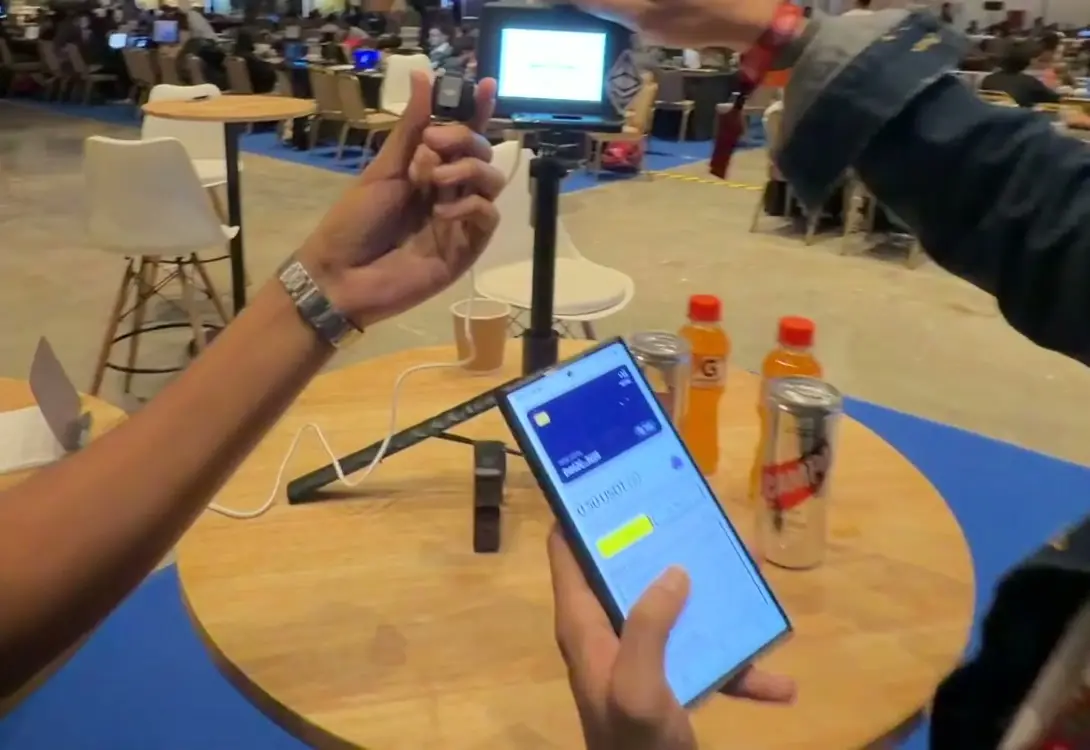
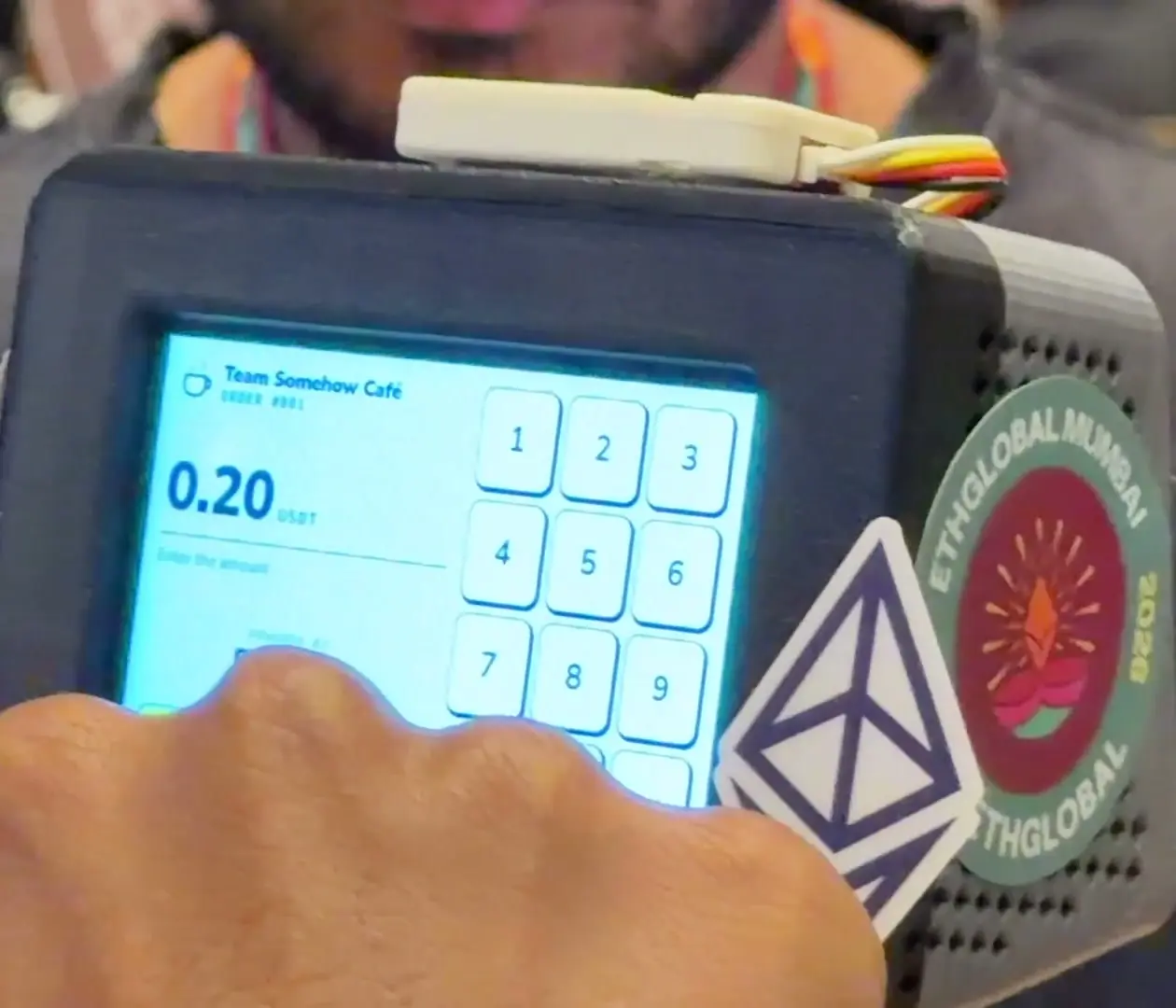
Tap2ETH makes that card one key of a smart contract wallet. The second key lives in your phone, behind your fingerprint. To pay, the shop enters an amount, you tap your card and approve on your phone. The wallet checks both signatures on-chain, then sends stablecoins.
We built all of it in 36 hours: the contracts, an Android app that reads the card over NFC, a relayer that pays the gas, and our own payment terminal on a Raspberry Pi with a touchscreen.
The wallet has spending limits, a freeze switch on the phone and time-locked recovery. Through Uniswap, it can also pay in ETH while the shop gets the exact USDT.
ETHGlobal Mumbai finalist, plus Whitechain's stablecoin payments track (2nd) and Uniswap's build track (4th).
The demo
Note to self
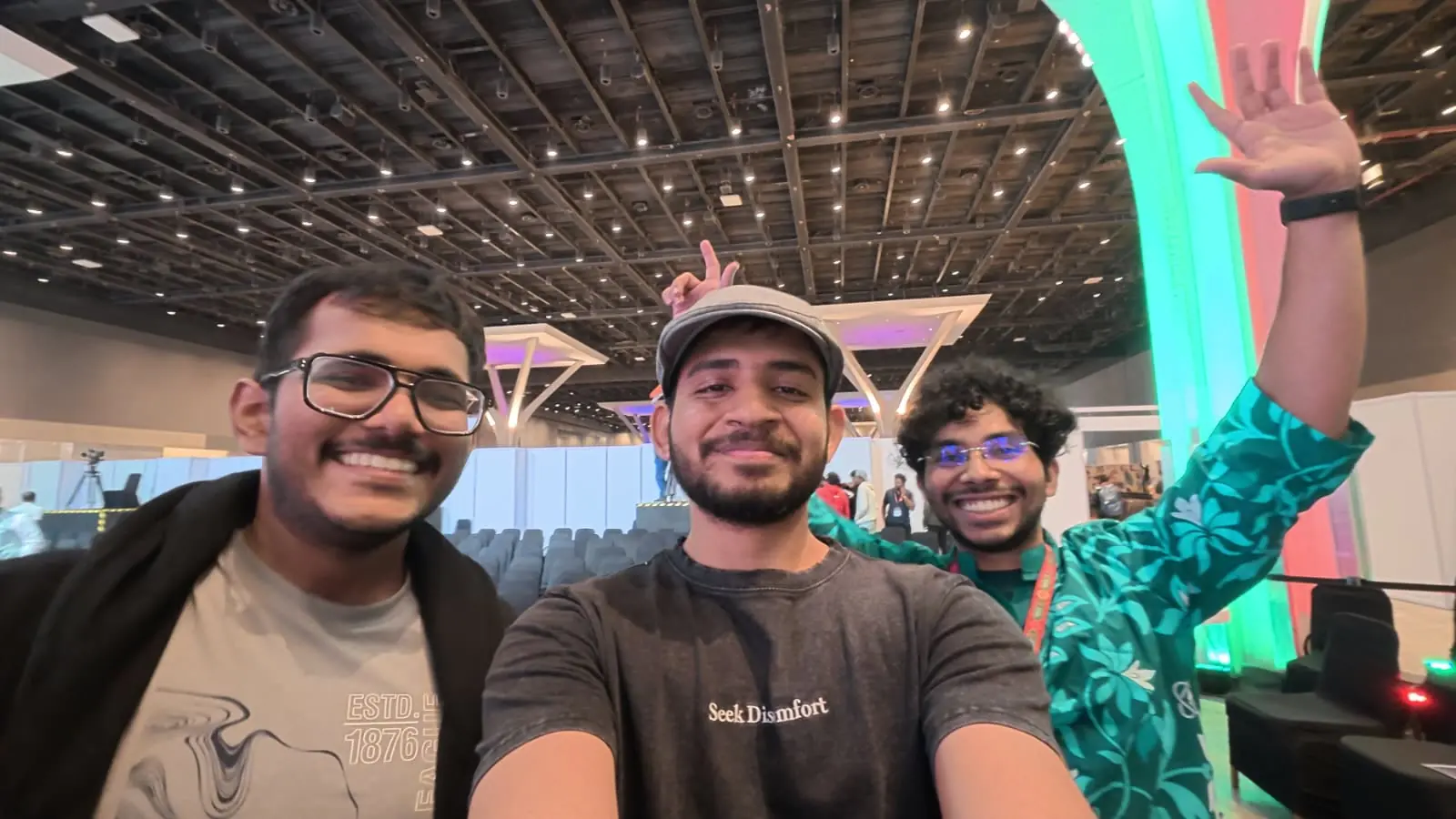
The best part of a hackathon is building something unique with friends, sleep deprived, on tons of coffee.
Getting better at hardware, one ETHGlobal at a time.
Stack
Solidity / Hardhat / React Native / Expo / Kotlin / Node.js / Raspberry Pi / Python / Whitechain / Uniswap v3